Tuesday, August 1, 2017

Alphabet Illustration by  Ananya KhaitanAnanya Khaitan is a... crss


Alphabet Illustration by  Ananya Khaitan

Ananya Khaitan is a graphic designer from India.  He has created characters with the shape of alphabet letters hidden in each illustration.  Can you see the letters in the illustrations above?  M and N (same gif), S, V, I, D and Z.   You can see the whole set HERE.  Thanks Quipsologies.


Find more art - follow us on Twitter, Instagram and Facebook.

Posted by Lisa

crss

Expertise Is a Lie and Why We Need a Better Definition of It

In 2015, an eighth grader did some research into the story behind the ‘No Irish Need Apply’ signs that were alleged to have existed in 19th century United States. Despite claims in 2002 from a distinguished historian that the signs were a myth and had never existed, the eighth grader Rebecca Fried was able to prove the historian wrong simply by doing some basic research on Google.  Not only did Fried found photographic evidence of the signs – but she found lots of it.[1]

Just because something is stated by an ‘expert’ doesn’t necessarily mean that it’s true.

Back in 1830, scientific writer Dr. Dionysius Lardner said rail travel at high speed is not possible because passengers, unable to breathe, would die of asphyxia.  And in 1903, the president of the Michigan Savings Bank advised Henry Ford’s lawyer not to invest in the Ford Motor Co because the horse is here to stay but the automobile is only a novelty – a fad.[2]

There are many more examples like these, and this is why not all experts are as highly regarded as they used to be.

How Society has Raised the Bar for Experts

Until recently, society looked up to and respected all experts and their opinions. However, in our new internet-age, knowledge is available to all at the click of a button.

Previously, years of education, work experience, and formal titles were the ways most people used to recognize experts.  Unfortunately, these are no longer good indicators.  For example, materials studied in the past can now be outdated. And as for those people with extensive work experience, this doesn’t guarantee they operate in an efficient or high-quality way.

Titles like doctor of ____, or psychologist of ____ are licensed/exams-based, but whether qualifications are up-to-date is open to question.

Judging whether a person is an expert based on the above indicators fails to take into account for the way information and knowledge changes over time. Not all experts will be dedicated enough to keep up with the latest developments in their chosen field.

Traditional experts became experts by taking a lot of time to investigate topics, but nowadays, the internet has massively reduced the time needed to research or learn a topic. You could think of it this way: In the past, experts owned the knowledge, these days this knowledge is freely available on the web.

Clearly, the internet has rapidly shifted information from the hands of those who have it – into the hands of those who do not.[3]

Of course, the development of the internet hasn’t wiped genuine experts of the face of the earth.  We should still respect real experts, especially those who have gone through the stages outlined below.

The Five Stages That All Genuine Experts Must Go Through

The Dreyfus model of skill acquisition lays out five distinct stages that all people must go through on their way to becoming experts.

Credit: Dreyfus Model of Learning

Stage 1: Novice

  • Follows the rules and plans they are taught.
  • Lacks flexibility in handling works and challenges.
  • Doesn’t know how to make judgements based on what they’ve learned.

Stage 2: Advanced beginner

  • Has more experiences and starts to interpret different situations.
  • Uses the same approach for different situations because they don’t have enough experiences to look deeper at each scenario.

Stage 3: Competent

  • More holistic in handling problems.
  • Starts to know how to interpret different situations with flexible plans.
  • Starts to formulate their own routines to achieve things.

Stage 4: Proficient

  • Able to solve problems intuitively.
  • Continuously adjusts their ways and approaches.
  • Perceives deviations from the normal pattern.
  • Gives suggestions and guidance to others based upon their knowledge and experiences.

Stage 5: Expert

  • Understands the whole picture intuitively with a deep and tacit comprehension.
  • Creates the guidelines, plans and rules for others.
  • Continuously self-tunes and self-learns.
  • Knows how to handle problems that have never happened before based on their knowledge.

As the stages show, experts don’t need to be child prodigies or intellectual giants. In fact, ordinary people can become experts, provided they are willing to invest the necessary time and effort.

The Dreyfus model of skill acquisition not only shows how true experts are made – but also reveals what’s missing from fake experts. Let’s take a look at these people now.

Don’t Be Fooled by ‘Fake Experts’

Many people who claim they are experts are actually just at stage 2 or stage 3 of the Dreyfus model.

These people have gained some knowledge and experiences, but they have not embraced the continuous learning and self-tuning process that real experts have. Because of this, when these ‘fake experts’ encounter problems that they’ve never seen before, they fall back on the same approaches and methods that they’ve been taught.

However, when it comes to these challenging cases, traditional methods may not work, and so-called experts will be unable to come up with original resolutions. (Unlike genuine experts who have reached stage 5.)

You now understand what makes a true expert. Read on to find out how to become one.

The Journey to Become a True Expert

To become a genuine expert, you must start as a learner and move naturally through each stage. There are several things to pay attention to when you experience each of the stages, and here’s the guide to help you get through each stage efficiently.

From Novice to Advanced Beginner: Log Your Experiences and Knowledge

Your step from moving from novice to advanced beginner should involve the development of a personal library of experience. A logbook of experience and knowledge learned should be completed to show your progression. Ask for feedback from your tutor/instructor, and add this information into your logbook. Finally, log your reflections for actions you’ve taken.

Let’s say that you want to learn how to play guitar, as a budding guitarist, at this stage you’ll be learning more and more chords, scales and techniques. Be sure to note down as much as possible in your logbook, so that you can easily come back to what you’ve learned.

From Advanced Beginner to Competent: Grab Every Opportunity to Practice Knowledge

Learning is by participation and interaction with others. Normally, this takes place through the exchange of ideas and opinions. As you move from advanced beginner to becoming competent, you’ll evolve from the acquisition of knowledge to participating in learning. You’re likely to find yourself starting to see beyond the normal situations and beginning to suggest ways to do things based on what you’ve learned.

In the guitarist world, this is the stage where you’ll find yourself practicing more – and even starting to experiment with your playing.

From Competent to Proficient: Reflect, Reflect, Reflect

This stage will take you the longest because it’s rooted in continuous exposure to different cases and reflections. You’ll learn to look at things from different angles, and suggest different approaches based on what you’ve learned. With continuous reflections and experiences in guiding others to perform, you’ll deepen your knowledge and skills.

This is the stage where your guitar playing is good enough that you could start to help others to learn and improve.

From Proficient to Expert: Continuous Learning and Tuning

A true expert doesn’t stop learning. They continue to look for new methods and approaches for different cases. They also reflect on what they can do better, and keep a close eye on the ever-changing information world. If you’ve reached this stage, but stop learning and reflecting, you’ll eventually fall back to previous stages.

At this point in time, you’re a genuinely expert guitarist. You’ll be good enough to perform professionally – or to be a top guitar tutor.

True Experts Don’t Possess Knowledge, They Explore and Share Knowledge

Due to the impact of the internet, knowledge is no longer exclusively in the hands of qualified experts. However, just because we can now Google information at the tap of a key, this doesn’t mean that we’re all now experts. Genuine experts still need to go through the five stages of skill acquisition.

Now you know what you need to do to become an expert in your field. Follow the five stages, and work your way up to becoming a true expert.

Reference

The post Expertise Is a Lie and Why We Need a Better Definition of It appeared first on Lifehack.


from Lifehack http://ift.tt/2w1K5GP

How Our Brains Manipulate Us to Eat Irrationally

Do you think you could resist if there’s a pizza fresh out of the oven in front of you? Smells good and looks crispy? Whether or not you’re actually hungry, you probably wouldn’t turn down a slice. If you had to wait 15 minutes for it, would it be easier to say no?

We’re bombarded with opportunities to make unhealthy choices every day. When junk food is readily available, the urge to indulge is even greater. There’s a satisfaction that comes with seeing a warm chocolate chip cookie or an ice cream cone and indulging right away.

You brain is wired to eat on impulse

Our relationship with food hasn’t evolved even though our dining options are more plentiful than ever. Eating high-fat and high-sugar foods when they were available was once a key to our survival.[1] Our brains are wired to enjoy the instant reward we get from chowing down, which leads to the impulse munching you catch yourself doing in the break room or the food court.

When you have the opportunity to enjoy something, your brain gets a hit of dopamine, a powerful neurotransmitter that rewards us for our behavior.[2] The positive association we make with the action drives us to be impulsive, even when taking advantage of the situation now may yield less favorable results than waiting. Would you rather have the piece of cake now or a beach body in six months?

The brain’s chemical response to these enjoyable situations is amplified by society’s need to have everything right now. Every time we check our smart phones or social media, we are also rewarded with dopamine.[3] We no longer wait for anything, and it’s turning us into dopamine junkies.

We want it all, and we want it now

This drive to get everything as quickly as possible leaves us chasing instantaneous rewards. We want instant gratification.[4] It’s our need to get what we want as quickly as possible that causes us to do things like neglect our retirement accounts so that we can buy the newest gadgets. Instead of spending 45 minutes preparing a nice home-cooked meal, we head to our freezers to microwave a substandard dinner in five minutes.

We’re all guilty of chasing instant gratification, and it is only through mindful consumption and interactions that we can learn to control our impulses.

You can see the big picture, but you’ll still battle your drive for more dopamine

Society and chemical reactions in your brain set you up to get your reward by the quickest means possible. This is an absolute nightmare for people trying to live a healthier lifestyle.

When you indulge in the hot slice of pizza in front of you, the reward that you get is instantaneous. Junk food really does make you happy. The problem is that too much of it can also make you unhealthy. Exercise can make you happy too, but it takes time to get satisfaction from working out. You have to endure a certain amount of suffering before you can see and feel the rewards.

It is so easy to become lost on your journey to better health when it seems like you have to run the gauntlet of temptation every day. You may know that you’ll live longer and have an improved quality of life by taking care of yourself, but it takes time to see and feel the results. You can feel the joy of that cookie as soon as you eat it.

Commandeer your body’s drive for rewards

If a person trying to lose weight sees the number on the scale go down, then he or she feels a surge of motivation. People who experience a plateau in their weight loss or fitness goals tend to become frustrated.

We have to change how we think about being healthy if we want to stick to fitness goals. We know that the rewards of living a healthy lifestyle are present every day when we commit. We have the autonomy and physical capability to do whatever we choose. We gain the energy that we need to do challenging and exciting work.

Obesity leads to a myriad of health-problems such as heart disease, stroke, and diabetes.[5] Many of these issues are life-threatening, or at the very least, they are life-altering.

Feeling tired all the time can cause you to under perform at work, and it prevents you from enjoying activities associated with an active lifestyle. Tired and unmotivated people do the bare minimum to satisfy their requirements, but they don’t innovate and they don’t typically enjoy what they do.

You know what being healthy can do for you, and you’ll have to actively wrestle control back from your dopamine-seeking brain. If you can learn to recognize small rewards that happen instantly when you opt for a healthy lifestyle, you may be able to overcome temptation.

We are less likely to commit if the reward is not certain

One of the things that makes enjoying immediate rewards so gratifying is that we don’t know what the future holds. Imagine that someone offers to give you $1,000 today or $10,000 10 years from now. Which would you choose?

Even though $10,000 is a significantly larger sum, most people opt to take the $1,000 in quick cash. They may think, “I could really use the grand right now,” or “I might be dead in 10 years,” or “The person who made the offer might change his mind.” It’s normal to worry about the uncertainty of the future and act in favor of the here and now.

When we ignore our long-term health for short-term gain, we will almost certainly end up with nothing. As the old saying goes, “An ounce of prevention is worth a pound of the cure.” We can’t control everything about our health, but we can certainly put forth an effort and make a commitment to wellness.

Making changes that lead to a healthier lifestyle doesn’t have to be hard. Start with small choices such as going for a walk every day or avoiding keeping your favorite snack within easy reach. At first, you’ll crave the instant gratification of lounging on the couch or chowing down, but eventually, you’ll want movement and healthy choices more.

As some point in your journey, the paradigm will shift in your mind. You will appreciate feeling more energetic and less achy, and that reward will overpower your desire to eat a sleeve of cookies. It may take a long time to reach this point, but if you can celebrate small victories every day, you’ll make it.

Don’t make it harder than it has to be

Making healthy choices becomes more difficult when you try to do everything in absolutes. People who try to become vegan overnight or cut out sugar all at once make their health journey harder. Their first step is so much more drastic, and when they give into temptation, the dopamine hit and the subsequent guilt are also much stronger.

The reward for dramatic change is almost invisible, which means that you’ll lose motivation quickly when you don’t see results. Take small steps toward your goal. Instead of banning all sugar from your diet, cut back on select snacks or tell yourself, “If I want cookies, I am not allowed to buy them. I have to bake them from scratch.” The aspiring vegan would do well to cut out one type of meat at a time instead of emptying the entire contents of their fridge and living off toast and hummus.

You’ve already taken the first step

If you’re reading this, then you are already interested in improving your health. The first step on a journey to wellness is to be more conscious about food choices and exercise. By understanding the forces that could stand in the way of a healthier you, you can make sustainable changes.

Retrain your brain so that its reward response is triggered by different activities. When you make subtle changes over an extended period of time, you’ll readjust your definition of what you find rewarding.

Reference

The post How Our Brains Manipulate Us to Eat Irrationally appeared first on Lifehack.


from Lifehack http://ift.tt/2w2g4Xg

M/Y OCTAVIABuilt and designed by Sunseeker, M/Y OCTAVIA...


M/Y OCTAVIA

Built and designed by Sunseeker, M/Y OCTAVIA impresses with its elegant silhouette and timeless interior styling featuring high-quality woods and plush white leather seating.

The 82.02ft /25m Sunseeker 82 motor yacht sleeps up to 8 guests in 4 tasteful air-conditioned rooms, all complete with private en-suites and entertainment systems. The master cabin is luxuriously appointed with a king-size bed and walk-in wardrobe, while the light-filled main salon features large windows, sunroof, and dining facilities.

The vessel’s chic, comfortable atmosphere extends onto the outdoor areas, where generous sunpads and a modern hydraulic swim platform along with alfresco dining & seating provide enticing opportunities for relaxing and socializing at sea.

Are You Spending or Investing Your Hard Earned Money?

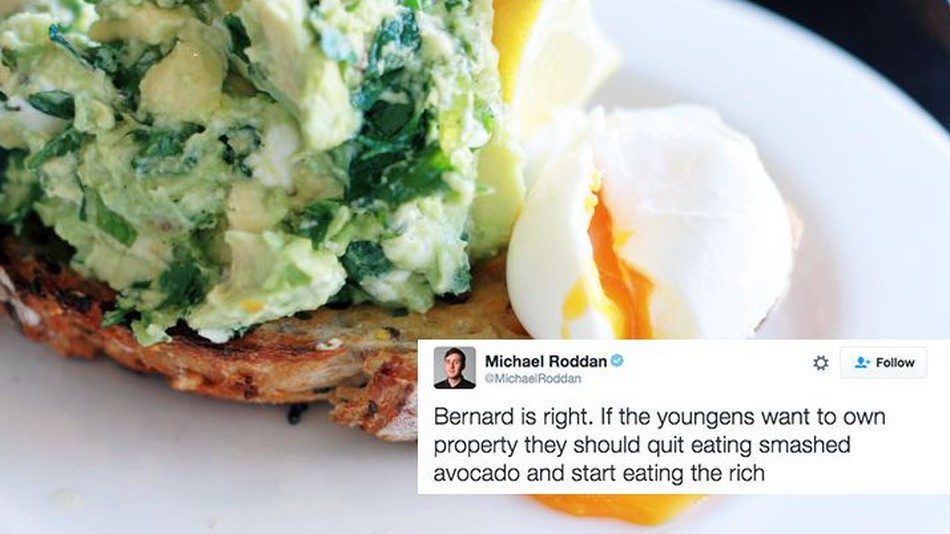
According to Australian Millionaire, Tim Gurner, our inclination towards frivolous items such as Avocado Toast are the reason why millenials can’t afford to put a down payment on a home.

As outlandish as this observation may sound, there is some truth to it. I seriously doubt that your decision to eat avocados is going to deter you from ever buying a home. But the act of irresponsible spending certainly will. The future is some far-off, unknown entity, and those of us who like to live in the now tend to indulge instead of invest. And while that instant gratification feels oh so good, eventually it will catch up with us. We need to start planning ahead.

Don’t squander away your hard earned money

We’ve been hearing it over and over since we were children. Our parents would give us a small allowance and tell us, “don’t spend it all in one place.” We may have laughed it off, but they were trying to teach us a very valuable lesson: we need to spend our money wisely.

We have reached an era where adults between the age of 24-35, what used to be ample home-buying age, are not able to afford a home of their own. A number of factors contribute to this issue: Credit standards have become stricter, making it more difficult for people with faulty or no credit at all to get a loan. Student loans are on the rise, burying millenials in crippling debt. Lifestyle changes- people are delaying getting married and having children, no longer prioritizing this as their ultimate goal. Many millenials are not receiving salaries that make them able to afford a home; many of them are living hand to mouth. Individuals in this age group are inclined to move to inner cities, where the act of renting is more prevalent than buying.

Ultimately, you don’t have to save up your money in order to buy a flat or home. If that’s just not your style, then do what makes you happy. But still be aware of your spending habits. Like I said, you work hard for your money. By all means treat yourself, but also consider the time you’ve put into earning that cash. It won’t be instant, but investing in yourself now will pay off big time in the future.

Avoid these money spending mistakes:

1. Don’t be a sucker for a seemingly “good deal.”

Imagine you’re in the market for a new television set, and you’ve narrowed it down to two choices. Both televisions are priced at $500, but one of them has been marked down from $800. Immediately you conclude that the one that has been marked down would be a better value. This thought process is known as Anchoring Bias. This means that we make decisions based on one piece of information (the anchor). In this case, the discount is the anchor. You don’t know why the store chose to discount this item, and what issues it may have.

I’m sure we’ve all been guilty of naming ourselves, “bargain shopper,” never being able to pass up a good deal or sale. Many of us fall victim to this marketing tactic during the holiday season. Everything is on sale! And since we can’t resist a good sale, we spend money we normally wouldn’t, on items we normally wouldn’t buy. The end result? We just end up with stuff. Stuff we don’t need, and doesn’t bring us any fulfillment. If anything it makes us feel empty, because everything new eventually loses it’s charm.

2. Buying the things we WANT, instead of what we NEED

Do you ever find yourself sifting through your bottomless closet, filled with nearly identical shirts and shoes, only to realize you have “nothing to wear? Shop Therapy make us feel good. But only momentarily. How good will you feel about those items when you realize you can’t pay your bills?

It is exciting to get something new, and in the moment, we believe that this new item will help to shape us into the person we want to be (this jacket makes me look professional, more people will take me seriously). But the truth is, these items won’t change us. And we’re likely to lose interest in them just after a few days.To avoid this dilemma, really consider how much you need an item before you buy it. Don’t buy it on impulse, wait until the next day and consider if you really need it. Chances are you’ll forget about the item.

3. Spending money we don’t have

You just got your first credit card, and your soaring high on the possibilities. You can just buy things without worrying about your account balance. So you buy. You buy until you max out your credit card. So what do you do? You apply for another credit card to support your spending habits. Next thing you know, you’ve racked up $20k in debt with no way to pay it off. Your credit score plummets and your phone is ringing off the hook with debt collectors.

The money isn’t tangible, so you don’t feel any real loss as you’re spending. Credit cards make spending way too easy, and debt that much easier to fall into. You can easily miscalculate how much you can afford; or worse, go into denial about how much you’re spending.

This is why so many adults are buried in debt. Since they don’t physically see the money leaving their bank accounts, they’ve disassociated the loss that comes with spending.

4. Buying instead of investing

Say that you’re an Instagram star, promoting a vegan lifestyle and the benefits it provides. You could spend $1000 on a new hand bag, OR, you could spend that money on a Nutrition Certification Course. Consider which is more beneficial to you: buying an expensive handbag that you’ve had your eye on, or investing in something that could potentially further your progress in life?

Sure, you’ll get that temporary high from buying that handbag, flaunt it around and be the envy of the town. But as soon as you’ve felt that satisfaction, that handbag no longer benefits you. It’s old news. However, if you spend it on the Nutrition Course, you could be well on your way to expert status on a subject that truly interests you. That is a benefit that will pay off for years to come; well after that ragged old handbag fell apart and became useless.

Never let the instant gratification trump you from investing something more rewardable.

5. Trying to “buy” a relationship.

Your relationship has been on the rocks for a while, and you’re not really sure how to show them that you care. So you buy them tokens of your affection, showering them with gifts. This may temporarily fix the tension in the relationship, but the core issue is still there.

If your partner is only with you because of what you can offer them materialistically, then you should know it isn’t real. You shouldn’t have to buy your friends or romantic partners with extravagant items. If your partners love for you is determined by how much you spend on them, then they don’t love you for you. They love your money and what it can get them.

You are buying the relationship; an investment that will ultimately end in loss.

6. Opting not to invest in Health Care.

You take great care of your body. You eat right, work out daily, and take all of your vitamins. You feel great! There’s no need for health insurance, your health is just fine. One day on one of your runs through the park, you slip on some mud, fall awkwardly, and fracture your neck. An ambulance picks you up and takes you to the hospital. They perform x-rays, cat-scans, keep you overnight for observation, and provide you with painkillers to alleviate your suffering. When all is said and done, you now owe the hospital just shy of $30k. Your health was in great shape, but you just can’t predict these things. If you had health insurance, you wouldn’t have to worry about these costs on top of your injury. But now you do.

Millenials may feel that they don’t need to waste their money on Health insurance, because they’re still young and still have plenty of energy to spare. Health isn’t the first priority, because time and age is still yet to take a toll on us. But before we know it, our bodies start to give out on us. We eventually will age, sending our energy levels and health on the decline.

Now, health insurance or not, you need to seek medical attention. And without coverage, your payments will be astronomical. An issue you never would have dealt with if you just sucked it up and made the monthly payments. Maybe you don’t need it now. But someday you will.

Invest in yourself and the future, and the payout will be well worth the sacrifice

When you really break it down and consider what is important, you realize you don’t actually need very much. What do you actually need? Your health, food (if that includes avocado toast so be it), water and shelter (clothing optional, but for the purpose of social norms I suppose we’ll include that as well).

Featured photo credit: Mashable via google.com

The post Are You Spending or Investing Your Hard Earned Money? appeared first on Lifehack.


from Lifehack http://ift.tt/2hkf9hK

Come bowl with me, Baby.


Come bowl with me, Baby.

Monday, July 31, 2017

Why You Always Feel So Tired Even After Rest

As mentioned in a previous article, I don’t believe in work-life balance. Instead I believe in work-life alignment. When it comes to rest, I don’t think letting your mind go empty while your body is lying on a sofa as real “rest”.  “Rest” is a poorly understood subject, and why many people often feel so tired even if they “rest” a lot.

Letting your mind run free is the quickest path to exhaustion

Most people tend to define rest as:

  • Lounging on the sofa or laying in bed
  • Doing nothing (is that even possible?)
  • “Netflix and chill”
  • Not doing chores

And while your body is in a relaxed posture your mind isn’t. Rest is a mental activity, not just a physical one.  When you engage in the activities like those in the list above, you encourage mental activity that is counterproductive to rest.

Mindlessly watching television, browsing the internet or reading tweets isn’t mindless at all. This type of mental engagement and stimulation can actually leave you more tired than you were initially. Your brain is not only quietly processing all that you are taking in, it is also preparing for and encouraging you to socialize[1]. A recent study[2] found that when the brain isn’t actively engaged in a conscious activity, it shifts into a state of prep for social interaction with others.

Another important fact to consider is that the brain needs something to focus on in order to achieve a state of symbiotic rest. It needs a purpose. Think about an activity requiring very little focus and attention–such as showering. Most times you are thinking about other things and your mind is busy working out problems and connecting dots. This type of mental activity is necessary and beneficial but it chases away rest. Letting your mind run free is the quickest path to exhaustion.

Human feelings are unreliable

When we trust our feelings, very likely we’d just lie on sofa after a day of work, even if we know for our health’s sake we should exercise for 30 minutes. On weekends, we tend to oversleep as we “feel” that we need more sleep, though that actually disrupts our sleeping patterns. Like taking rest, simply being yourself isn’t necessarily relaxing. When we rely on our feelings, we end up feeling more tired.

What is rest, really?

Rest is an activity. It is not a state of “doing nothing”.  Below are 2 important ways to trigger your brain into actively engaging in rest. They directly oppose what society typically considers rest and relaxation but I challenge you to give them a try.

Switch between tasks that are opposite in nature.

If you are working at the computer, after a few hours switch to a more physical task, or go for a walk or short run. If you are working on a very technical and detail oriented project, switch to working on something requiring a bit more creativity. After being in meetings all day or giving a presentation, work on a quiet task, alone that does not involve other people such as balancing your checkbook or prepping food for dinner. As you participate in each activity, be sure you are practicing mindfulness — or being fully present — as you engage in each activity.

The key here is to remember the brain needs and likes focus. After engaging in some of the tasks above, you are most often tempted to just “veg out”.  Giving into this feeling will sap you of the remaining energy you have left.

Have light exercise

Exercise is the cure for what ails us. Moderate exercise reduces stress[3], increases productivity, overall health and wellness and prolongs life. Research shows that regular amounts of light exercise are one of the best treatments for those suffering from exhaustion and fatigue[4].

This fact holds true for those with sedentary or physically demanding jobs. Whether you are in a tiny cubicle sitting all day or working at a dock loading and unloading heavy freight, studies show that light amounts of exercise beyond your daily routine helps your mind and body achieve rest.

A study conducted by researchers at the University of Georgia[5] found that moderate and low-intensity workouts increase feelings of energy.

“A lot of people are overworked and not sleeping enough,” said Patrick O’Connor, co-director of the university’s exercise psychology laboratory. “Exercise is a way for people to feel more energetic. There’s a scientific basis for it, and there are advantages to it compared to things like caffeine and energy drinks.”

In the study, research subjects were divided into three groups. One group was prescribed 20 minutes of moderate-intensity aerobic exercise three times a week for six weeks. The second group engaged in low-intensity aerobic exercise for the same time frame and the third group–which was the control group– did not exercise at all. Both groups of exercisers experienced a 20 percent boost in energy levels compared to the group of non-exercisers. Researchers also discovered that intense exercise is less effective at mitigating fatigue than low-intensity workouts. The low-intensity group reported a 65 percent drop in fatigue levels, while the high intensity group reported a 49 percent drop. It’s important to note that any exercise is better than no exercise.

In order to truly feel rested and refreshed, it’s time to develop a new norm and give our mind and body what it actually needs to rest.

Reference

The post Why You Always Feel So Tired Even After Rest appeared first on Lifehack.


from Lifehack http://ift.tt/2f3Kzb9

Icelandic Landscape Paintings by Claire HummelClaire Hummel is...


Icelandic Landscape Paintings by Claire Hummel

Claire Hummel is currently a concept artist and art director working out of Seattle. This is a series she did during an artist residency in Iceland.


More amazing art on Cross Connect Magazine.

Twitter // Facebook// Instagram

Posted by Magnus Atom